Normal high ▬ · normal low ▬ · daily mean ┄
Climate & Space Weather
The longer-term context behind today's weather, plus the weather above the weather — ocean heat, surface temperature departures, sea ice, ENSO and MJO state, live solar imagery, and aurora forecasts.
Local Climatology · Your Locations
Annual Cycle · 30-Year Normals
This Day Across 30 Years
—
Precipitation · Monthly Normals
This Year vs Normal
Daily Anomalies
Daily Sea Surface Temperature
NOAA OISST v2.1Daily SST and anomaly maps — the dataset behind the viral 2023–24 ocean-warmth charts. 1–2 day lag.
Daily · ~2-day lag
Launch viewer →
Daily 2m Air Temperature
ECMWF ERA5Daily surface air temperature and departure from the 1979–2000 normal — the atmospheric companion to SST.
Daily
Launch viewer →
Daily Map Animation
Combined viewerAnimated viewer for SST, 2m air temperature, and sea ice — date slider plays back through any year or basin.
Daily · full archive
Launch viewer →
Monthly SST
NOAA ERSSTv5Monthly SST and anomaly maps back to 1854 — long-term context for the daily snapshots, gridded reanalysis.
Monthly · 170-year archive
Launch viewer →
MJO & ENSO · Live State
RMM Phase Diagram · Bureau of Meteorology (Australia)

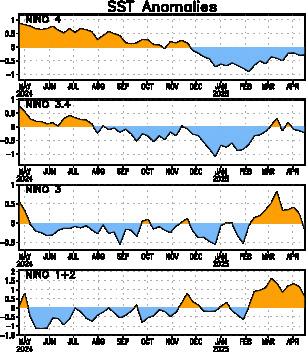
Niño Region SST Anomaly Time Series · NOAA CPC
Climate Indicators
Sea Ice Concentration
NSIDCNSIDC at CU Boulder — Arctic and Antarctic sea ice extent, daily and monthly, with anomaly time series.
Daily
Launch viewer →
Extreme Weather Watch
Historical recordsHistorical weather for any US station — daily highs/lows, monthly extremes, snowfall, rainfall, full record.
Per-station archive
Launch viewer →
The Sun, Live
NOAA SUVI · GOES Solar Ultraviolet Imager
Geomagnetic Activity
Planetary Kp Index · NOAA SWPC
—
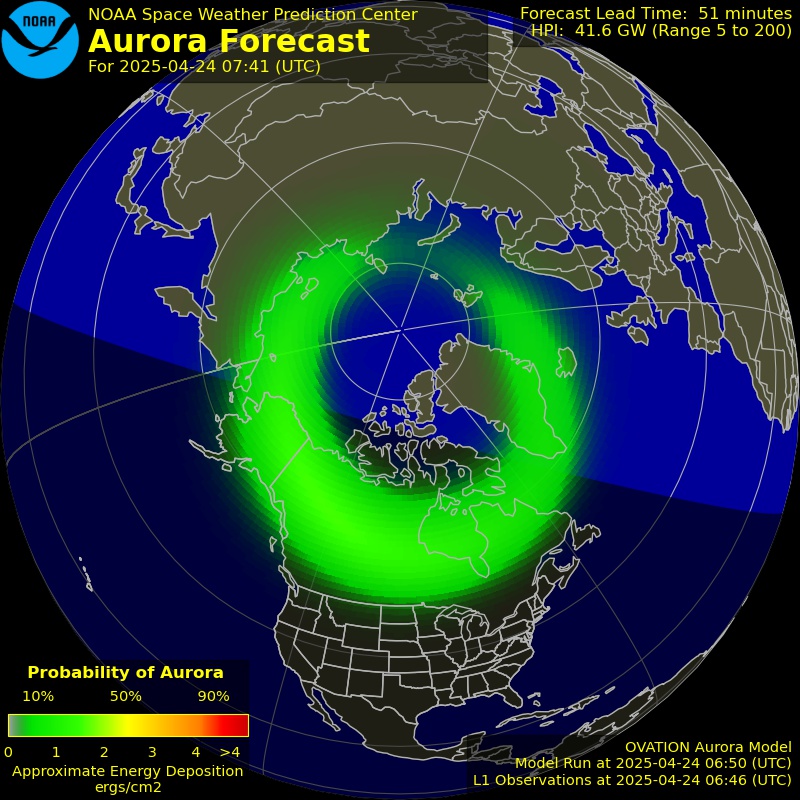
Aurora Forecast
NOAA SWPC OVATION · 30-minute aurora forecast
Deeper Sun
Real-Time Solar Wind
NOAA SWPC · DSCOVR + ACELive solar-wind parameters from DSCOVR at L1 (ACE backup) — IMF, Bz, speed, density, ~30–60 min ahead of impact.
1-minute cadence
Launch viewer →
Helioviewer
NASA + ESA · Multi-mission solar archiveNASA + ESA's joint solar-imaging platform — SDO, STEREO, SOHO, and ground telescopes with solar-event markers.
Continuous archive
Launch Helioviewer →
Local climatology computed client-side from the Open-Meteo Archive API (ECMWF ERA5 reanalysis, CC-BY 4.0) — 30-year reanalysis statistics, not official NWS/NCEI station normals or all-time records. Daily anomaly imagery from Climate Reanalyzer, University of Maine Climate Change Institute (CC-BY-4.0). Climate indices from NOAA Climate Prediction Center and the National Snow and Ice Data Center at the University of Colorado. Solar imagery from NOAA's Solar Ultraviolet Imager (SUVI) aboard the operational GOES satellite. Kp index, aurora forecasts, and real-time solar wind also from the NOAA Space Weather Prediction Center. Helioviewer maintained jointly by NASA and ESA.